American Sign Language:
"ask"
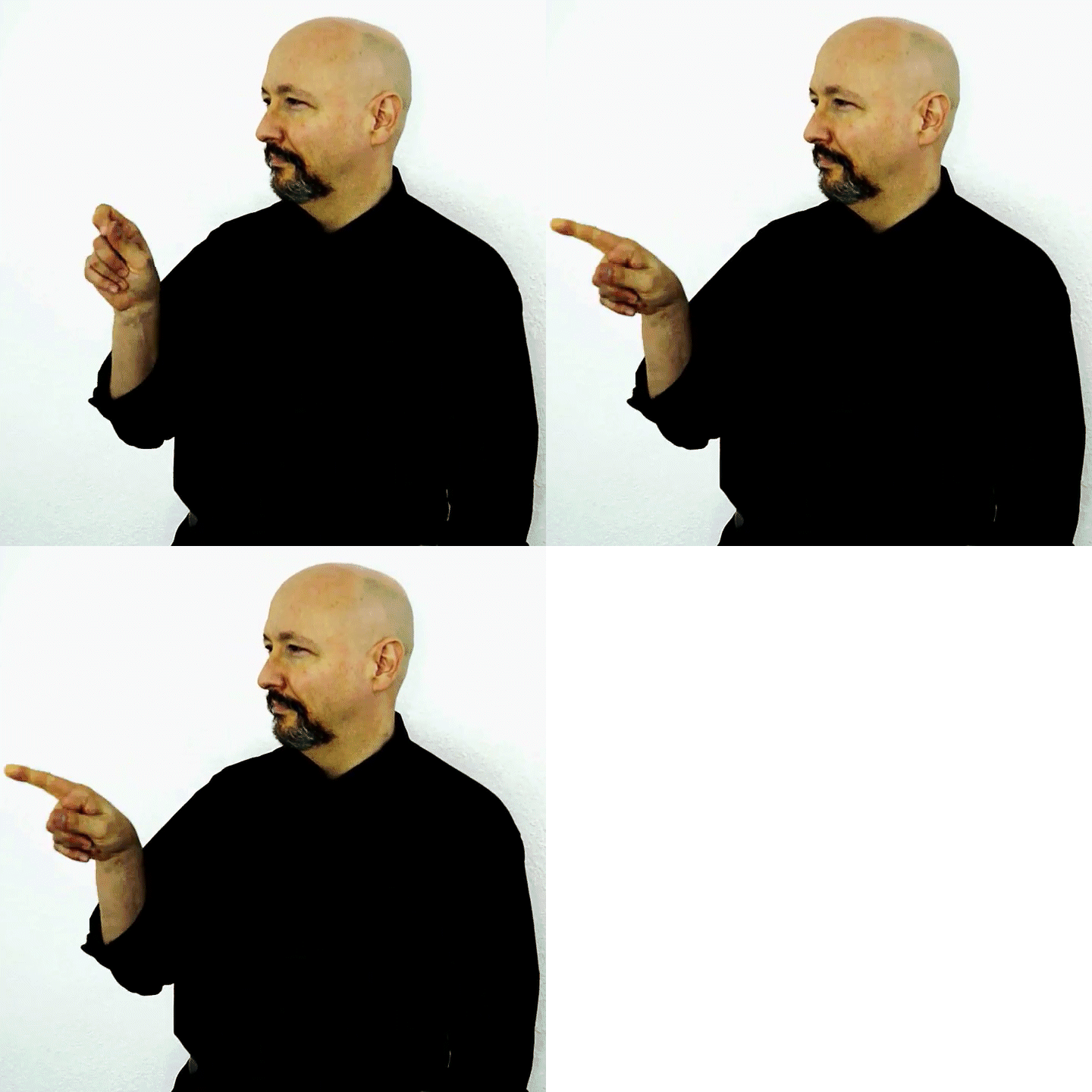
The sign for "ask" has a couple of different versions.
The "ASK-to" version of the sign is good for everyday general questions such as "ask that person."
This version of "ask" is transitive. That means it generally uses an object as in "ask somebody." This version of "ask" is "directional." That means the direction of the sign can establish who is the subject and who is the object. You do this sign in the direction of the object (the person being asked).
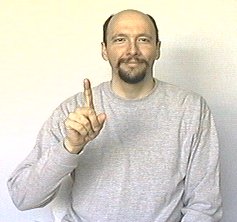
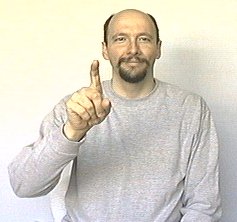
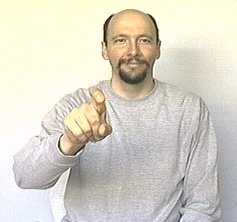
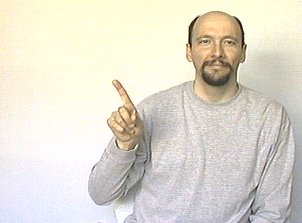
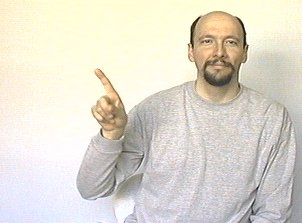
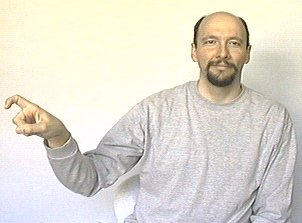
"ASK-to" starts as an index finger and changes into an "X" hand shape as it moves toward the person being asked.
I/me-ASK-you
Movement is forward. Starts in an "index" shape and ends in an "x" handshape.
you-ASK-me
I/me-ASK-himhe-ASK-me would start off to the side (or the direction of your referent if established) and would move toward you. The palm is toward the person who is being asked (in this case, you), so the palm would face the signer (you) in the statement "he-ASK-me."In a message dated 2/10/2012 1:11:51 P.M. Pacific Standard Time, day.frank@comcast.net writes:Dr. Bill,
lifeprint.com is a wonderful tool that's been helping me with ASL. thank you so much for its content.
quick question for "ASK-to" sign. if signing "he-ASK-me", would you
still have the palm facing out (away) and bring the sign back to
yourself as you switch to the 'x' handshape? or do you face the palm to
yourself and bring the sign towards yourself?
thank you again,
david
This sign is directional. You can do it in the direction of the person whom is being asked.
pro.1-ASK-pro.3
Also see: ASK-TO
ASK-[advanced versions]:
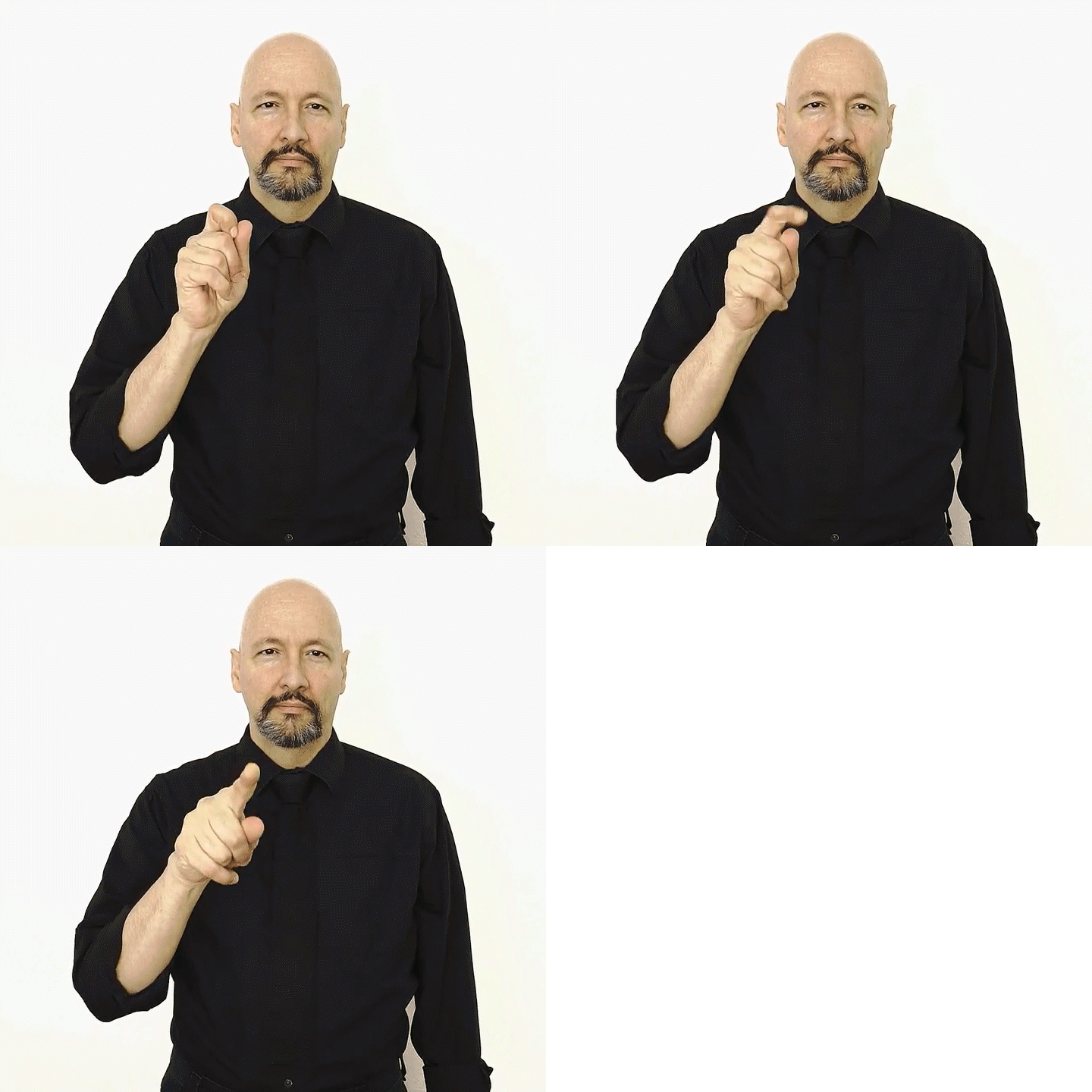
These two following versions start with a cocked-index finger and end with a straight index finger.
I/me-ASK-you-[version]
ASK-to-[version]
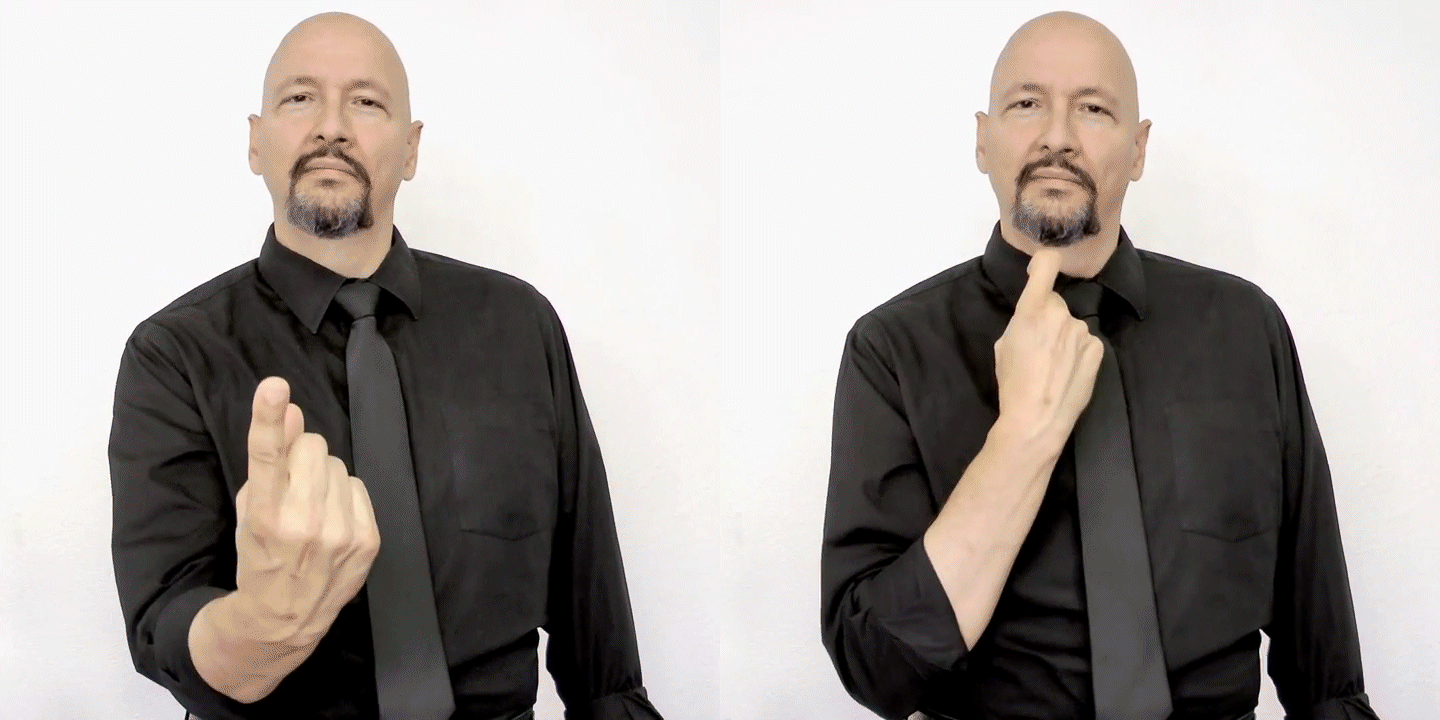
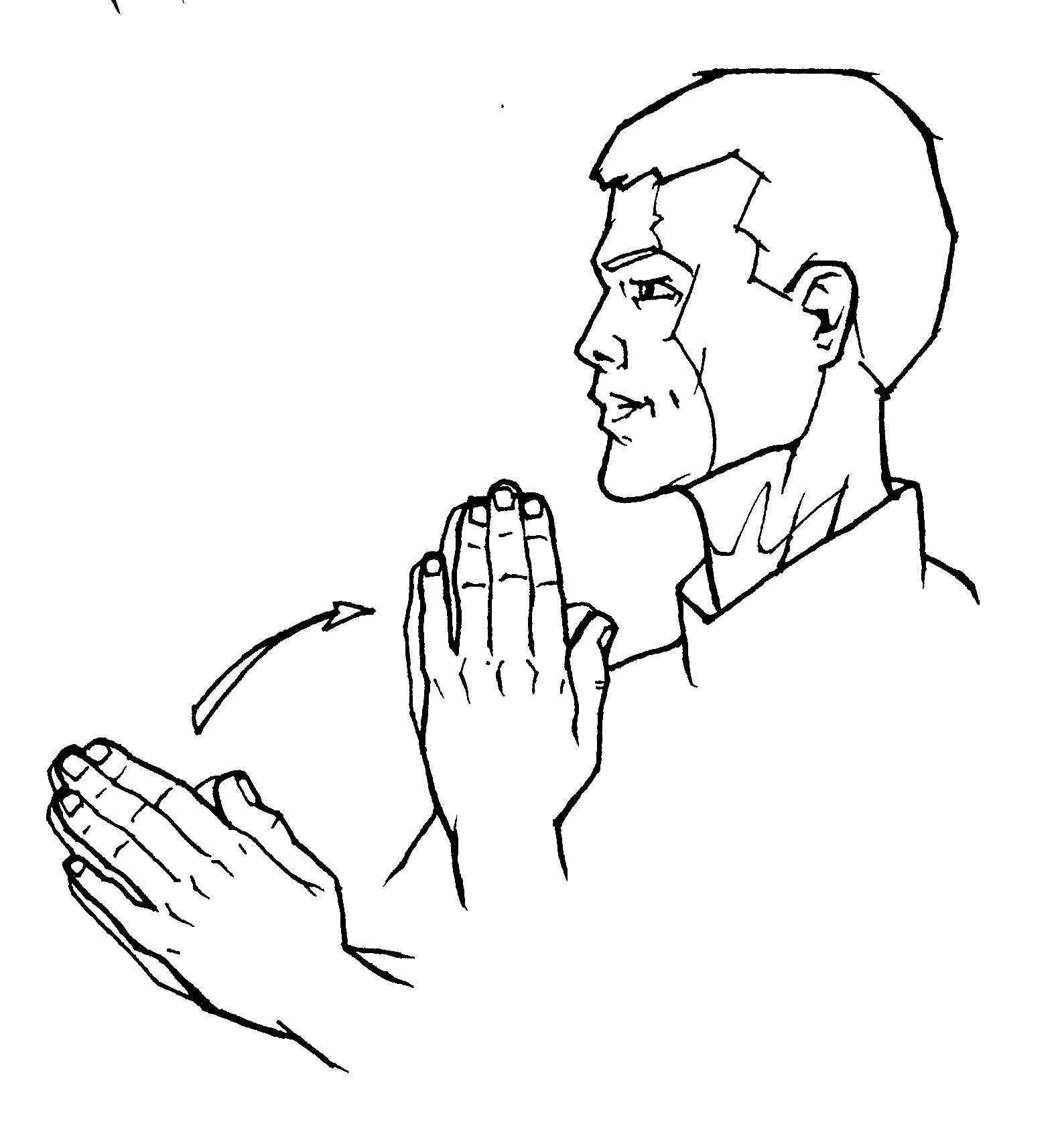
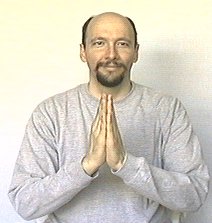
There is a more formal version of the sign for "ask." The more formal version is good for such concepts as "request."
The "REQUEST-[ask]" is not directional. It can mean "a request / the request." It can be used in context to mean "PRAY." (For example, if you are in a church and see this sign it might mean "pray/" or praying, especially if it has small, partially repeated movement.
REQUEST:
Notes:If you do the sign "REQUEST" a little smaller and use a double motion, it can mean praying, or--with a plaintive facial expression--pleading. If you do the sign REQUEST and hold it at the end while using a hopeful facial express as you look at the other person this sign can be used as a quaint way to sign the concept of "oh please do this for me."
Additional OPTIONAL reading:
In a message dated 8/19/2005 5:12:45 AM Pacific Daylight Time,@goeaston.net writes:
When would you use 'ask' (two hands together) versus 'ask' index finger?
- LindaLinda,
Let's call the two handed version "ASK" and the one-handed version "ASK-to."The one handed version (ASK-to) is much more "directional." You can inflect (change) the direction of the movement of the sign and the palm orientation of the sign to establish who is the subject and who is the object of your sentence.
I use the "two handed" ASK version in more formal situations and occasionally as a noun. The two handed version is similar in usage to the English word "request." "Request" can be used as a noun or as a verb.
The ASK sign is less transitive than ASK-to. By transitive I mean "referring to an object."
For example in the sentence, "Go ask your mom," the object is "mom." You would sign, "ASK-to MOM" with one hand. You would do the sign in the direction of the child's mother if she is around.
Compare that with the sentence "He has a request." This would generally be signed "HE HAVE ASK." Or more likely, "HE WANT FAVOR" or "HE WANT KNOW, YOU-MIND..."
By the way, if you wanted to sign, "He has a question," you might use "HE HAVE QUESTION-MARK," (using the variation that draws a question mark in the air).
Bill
In a message dated 8/24/2005 4:16:14 A.M. Pacific Daylight Time, @goeaston.net writes:
so in a sentence "he asked me for money" would it be 2 hands, like a request? Or, "I asked him not to go out" 2 hands? Or, " I'll ask him to stop at your house" Or "I asked her to baby-sit"... I'm still not sure... does it matter? Is the 2 handed ask used less frequently? Sorry to be dense.
- LindaLinda,
These are two different signs. Each has it's own meanings and usage.
I've actually seen the sign REQUEST used to mean "pretty please." For example, "John" might ask Mary for a favor. Then as she is thinking about it, John does the sign "request" and holds it with a pleading look on his face. The sign REQUEST, when done with a double movement, actually means "pray" or "plead with."
The sign ASK-TO is not used in that manner.
In the sentences you listed if you used the sign ASK-TO the meaning would be "casual and straightforward." If you used the sign REQUEST the meaning would be more serious, formal, or pleading.
Additionally, the sign REQUEST, when done at the end of a prayer can mean "amen." ("REQUEST" is one of four popular ways to sign AMEN.)
Bill
ahh, the lightbulb is starting to flicker - so if I said "when I go to work I will ask for time off" that would be 2 hands? But if I said "the boys were wild so I asked them to leave" it would be one hand?
- LindaLinda,
Telling someone that you are going to seek time off work would indeed lean toward using the sign REQUEST rather than the sign ASK-TO. It could go either way though depending on the relationship between the employee and the boss, the level of confidence of the employee, the difficulty of the process of asking (while passing in the hall or while sitting down in the boss's office).Now, your second sentence would actually use the sign "TOLD." You are using a hearing euphemism. "I asked them to leave" is a polite Hearing way of saying that you told them to leave. In ASL we are more direct. You wouldn't inform your friend that you asked two rowdy boys to leave. You'd inform your friend that you told two rowdy boys to leave. You did not really ask them did you? You did not have your eyebrows up in a yes / no question expression as you "asked them to leave." You did not wait at the end of your sentence for them to reply "yes, no, or we'll think about it." Instead you had your face in a stern facial expression with tight lips and a furrowed brow and you told them leave.
-Bill
oh, wow... you've given me allot to think about - it's really hard to think of those things when I'm signing to my friend in conversational English... I'm concentrating on the signs rather than the concept... of course she understands what I'm trying to say, but I wish I could get it right. It's hard when I only spend an hour here or there with her, every few days... thanks again for all the time you've taken to explain to me.
-Linda
David asks:
Quick question regarding the "ASK-to" sign. If I'm signing "he-ASK-me", would I still have the palm facing out (away) and bring the sign back to myself as I switch to the 'x' handshape? Or do I face the palm toward myself and bring the sign towards myself?
Thanks,
- David
Dear David,
For the sign "he-ASK-me" you always point the palm toward the person who is being asked (in this case, you), so the palm would face the signer (you) when making the statement "he-ASK-me." (He asked me.)
To do the sign "he-ASK-me" you would start off to the side (or the direction of your referent if established) with the palm facing yourself, and would move the sign back toward your body as you change it from an "index" to an "x"-hand.
- Dr. Bill
In a message dated 7/7/2012, a 12-year-old from the east coast writes:
"I wanted to know the difference between the ASK sign and the sign for NEED."
Thanks,
- Devon
Dear Devon,
ASK: Starts as a straight index finger that turns into an "X" as it moves toward the person being asked.
NEED: Starts as an "X" and bends at the wrist.
- Dr. Bill
More notes:
The two-flat-hands-version of ASK/request takes so much effort to do that you've got to have a serious reason for investing that much energy to refer to the concept of "asking."
The two-handed version thus is going to be more along the lines of "beseech," "implore," "supplicate," or "entreat."
Compare these two phrases:
"Go ask God." (Use the two handed version."
"Go ask mom." (Use the one handed version."


*
Want to help support ASL University? It's easy:
DONATE (Thanks!)
* Another way to help is to buy something from Dr. Bill's "Bookstore."
* Want even more ASL resources? Visit the "ASL Training Center!" (Subscription
Extension of ASLU)
* Also check out Dr. Bill's channel:
www.youtube.com/billvicars
You can learn American Sign Language (ASL) online at American Sign Language University ™
ASL resources by Lifeprint.com © Dr. William Vicars