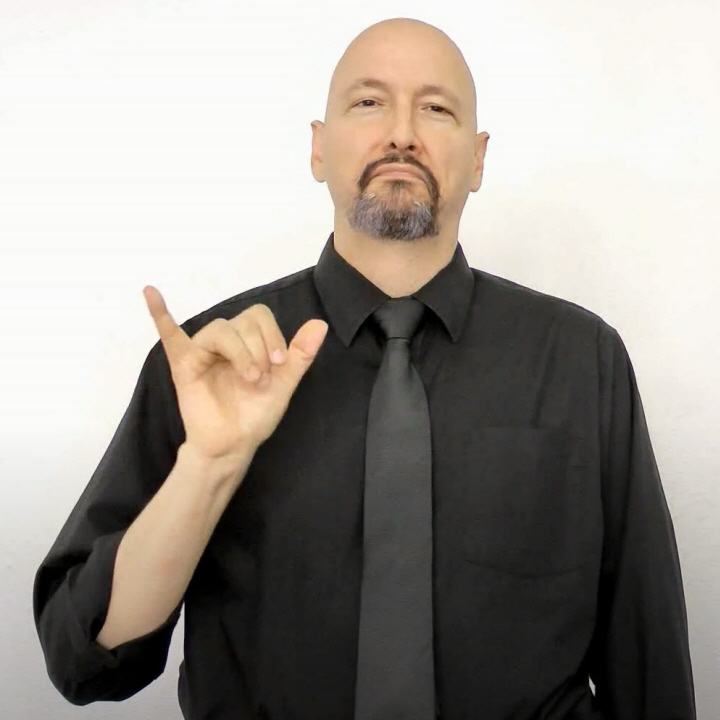
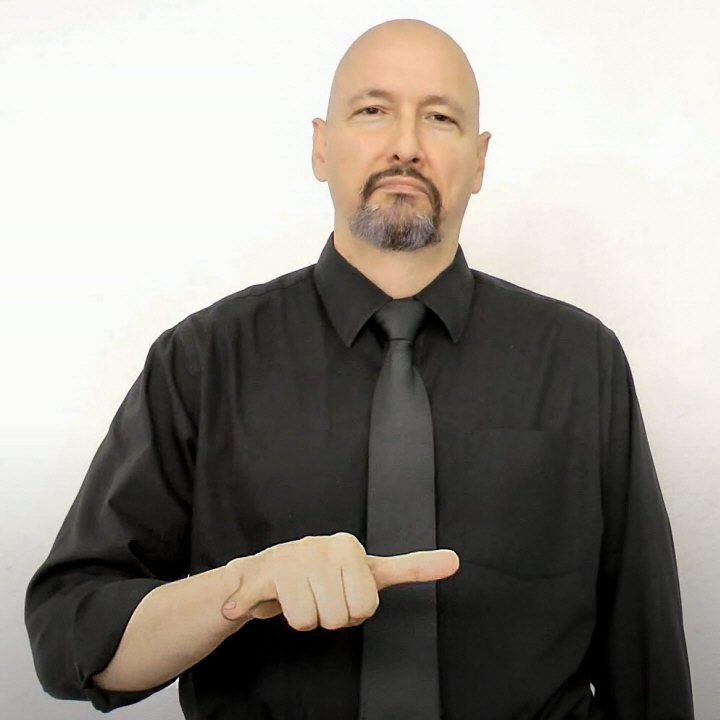
THAT (one-handed version)
That thing right there:
There is a generic sign for THAT which uses two hands. The (palm
down) dominant "Y"-hand is brought down onto the (palm up) palm of the
non-dominant flat-hand.
THAT (2-handed non-referential version)
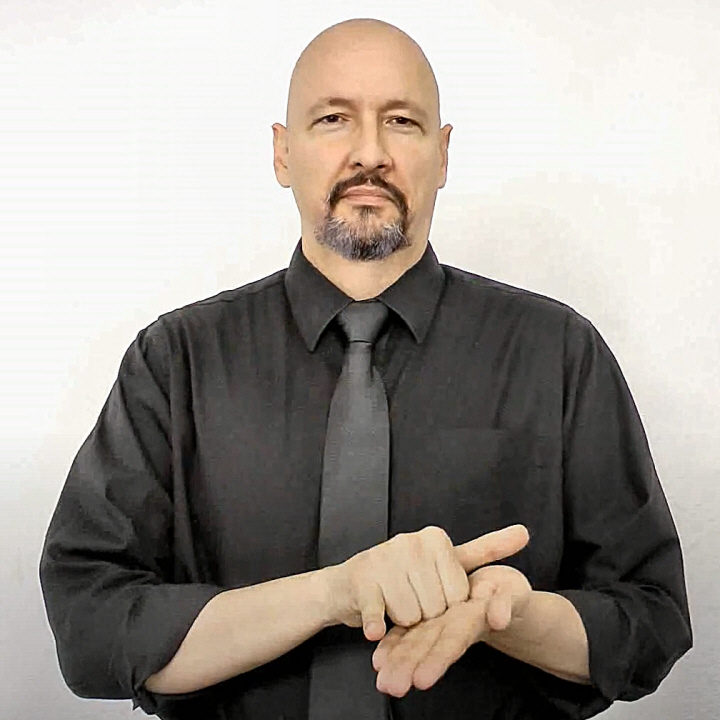
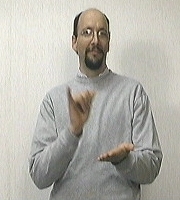
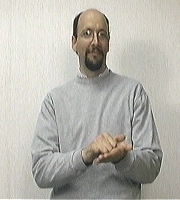
The generic 2-handed version (above) is sometimes used when you want to
express the concept of "that" but aren't making a specific reference to
something in the local signing area.
The sign THAT can be used to refer to a specific thing in your environment
by doing a one-handed version of the sign toward that thing.
THAT-ONE (specifically)
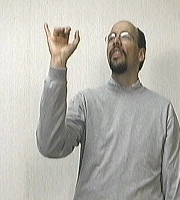
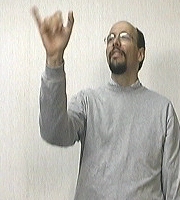
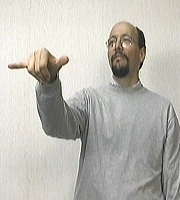
That one? (question form)
THAT-ONE (the one way over there)
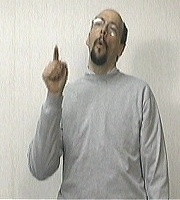
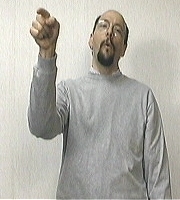
Notes:
Question:
Regarding the lesson: An Interview with Cäsar Jacobson (09) "Find Out" series:
A student asks:
At 34:17 is the sign for THAT the same sign as IMPOSSIBLE?
Thanks!
https://www.youtube.com/watch?v=57AUM3sjXks&t=34m17s
Answer:
The handshapes, palm orientation, and location of the 2-handed version of the
sign THAT and the sign IMPOSSIBLE are generally the same but the sign
"impossible" typically uses a double movement accompanied by a slight negative
head shake and a skeptical facial expression (non-manual marker) that indicates
you don't believe something can be done.
The 2-handed version of the sign "THAT" tends to only use a single movement.
Also often (but not always) the sign tends to use a bit of movement in the
wrist. This extra movement is particularly common in the 1-handed version of
"THAT-ONE!" -- often accompanied by a head-nod.
Also see:
*
Want to help support ASL University? It's easy:
DONATE (Thanks!)
* Another way to help is to buy something from Dr. Bill's "Bookstore."
* Want even more ASL resources? Visit the "ASL Training Center!" (Subscription
Extension of ASLU)
* Also check out Dr. Bill's channel:
www.youtube.com/billvicars
You can learn American Sign Language (ASL) online at American Sign Language University ™
ASL resources by Lifeprint.com © Dr. William Vicars
