American Sign Language: "self"
The sign "SELF" is very versatile and can mean many things. For example, it can be used to mean "Your own." It can also mean automatic (on its own.)
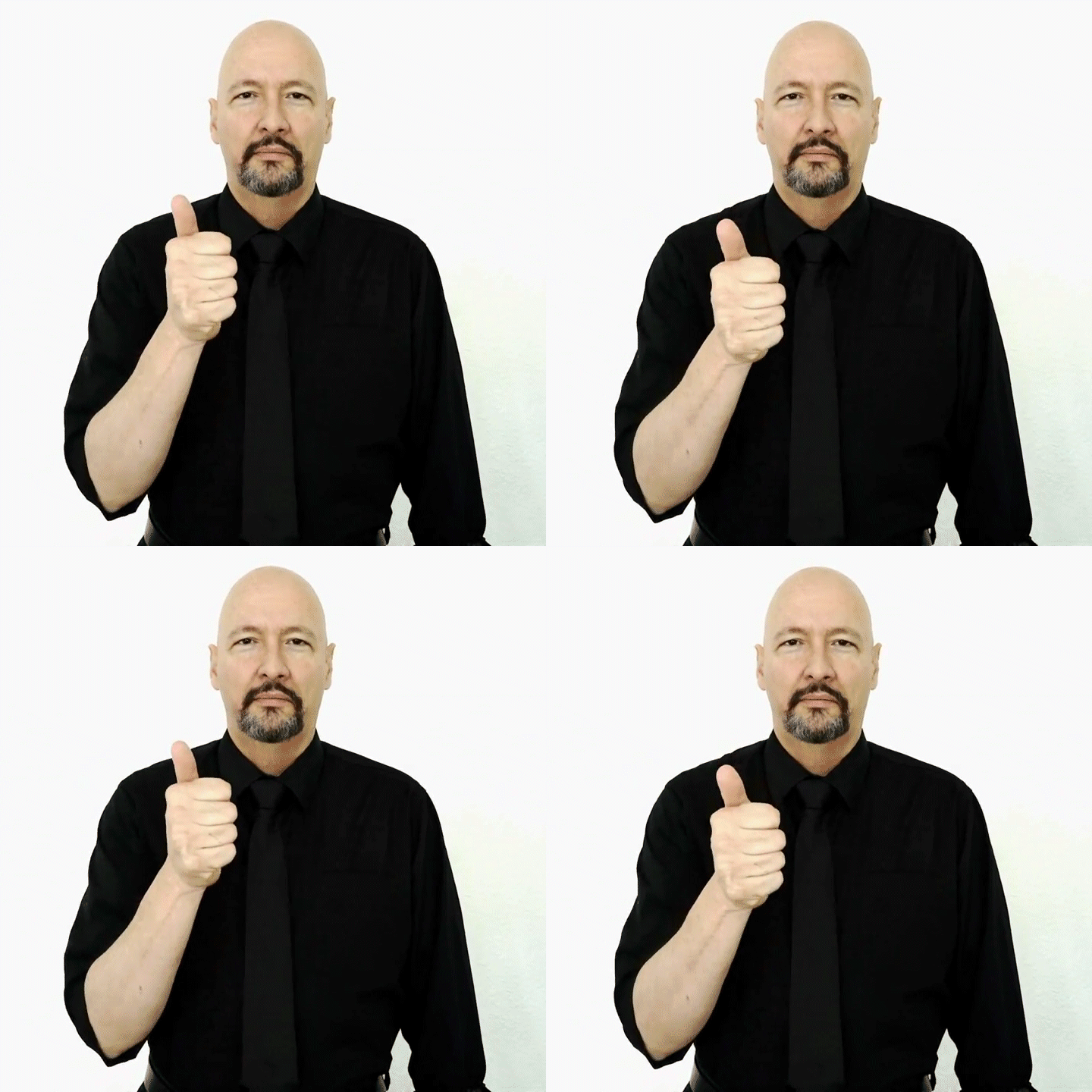
SELF / YOURSELF / "your own"
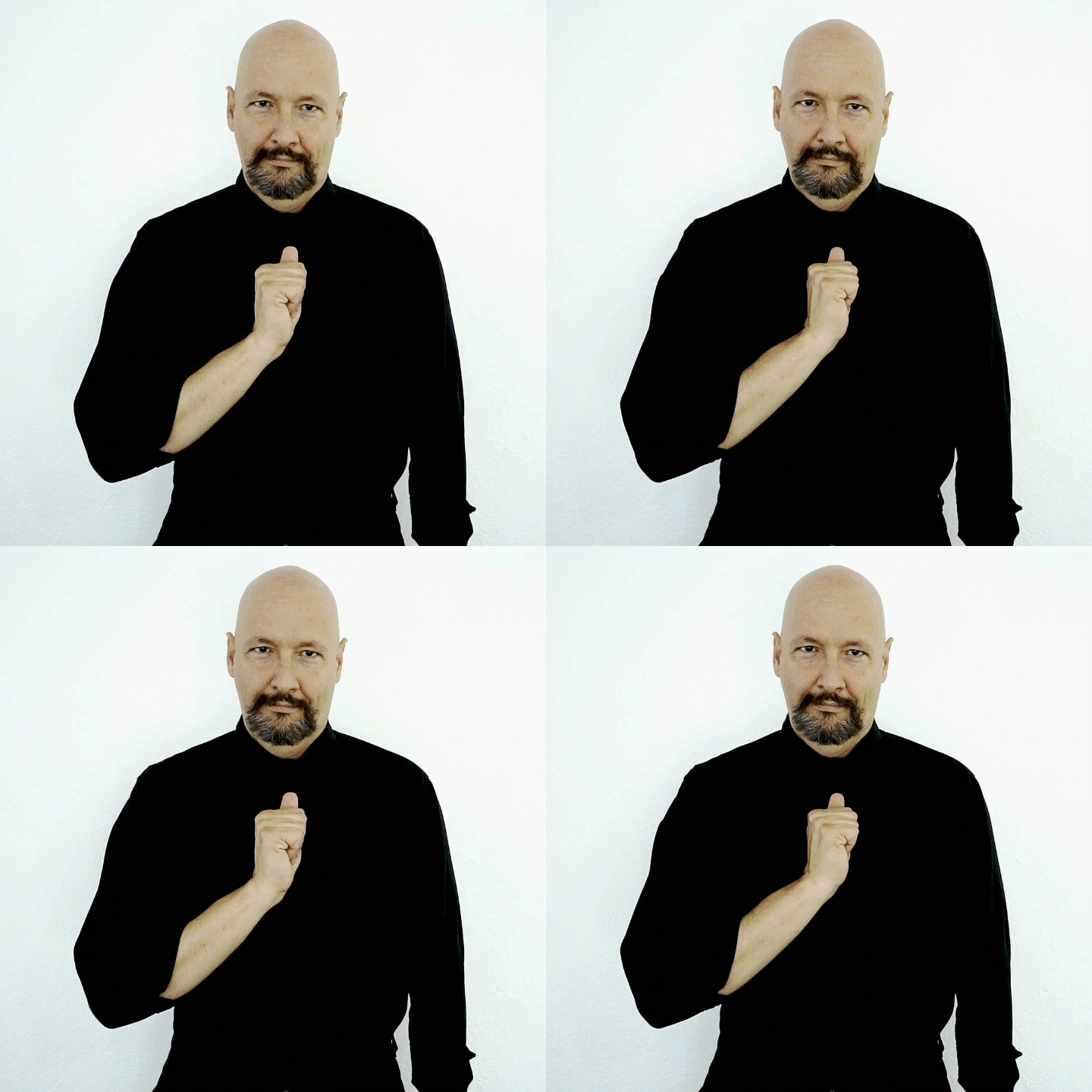
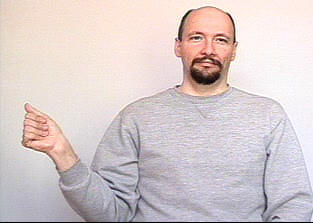
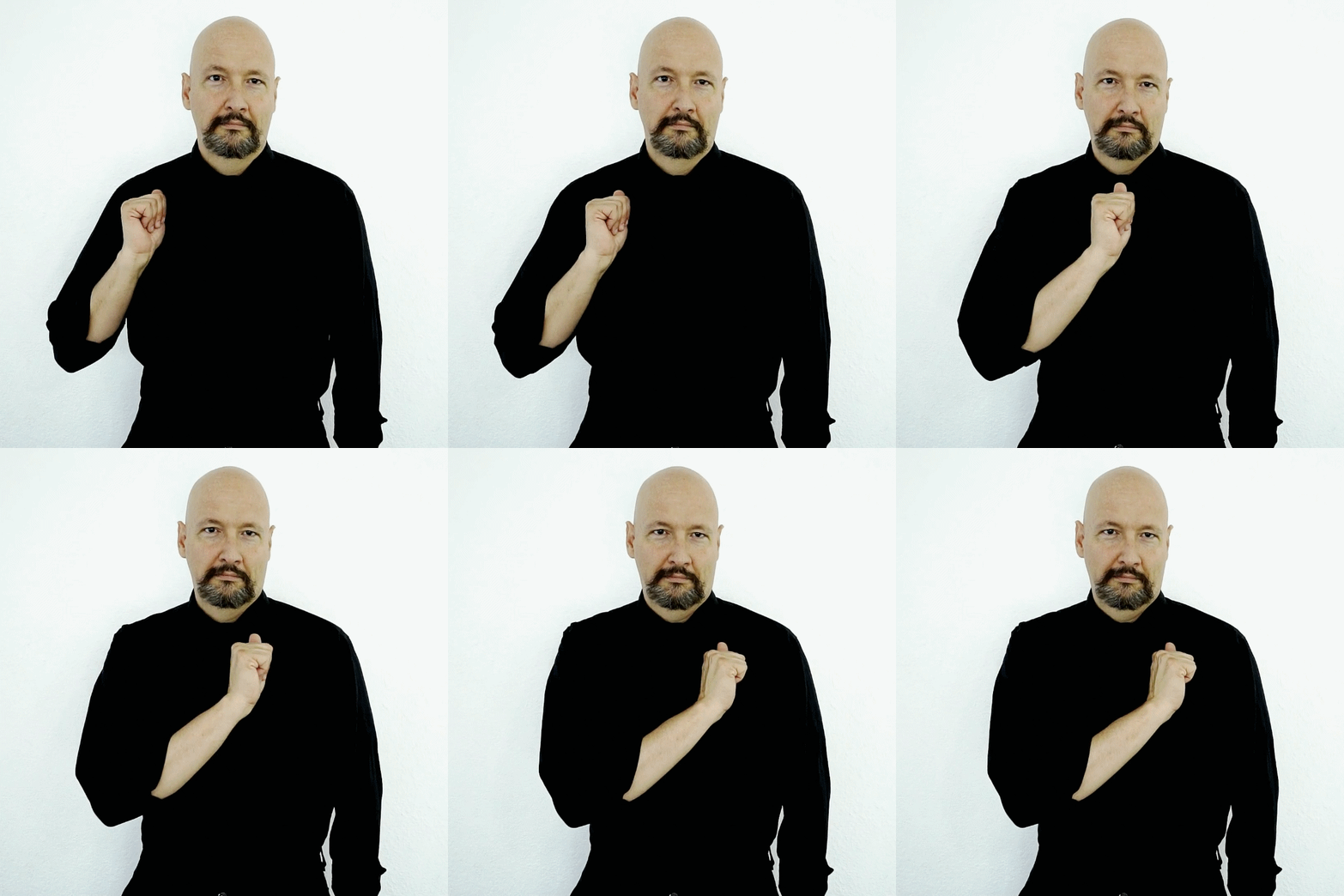
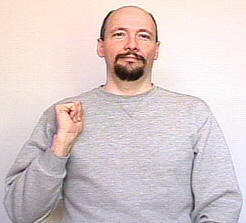
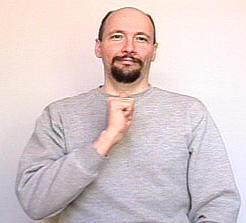
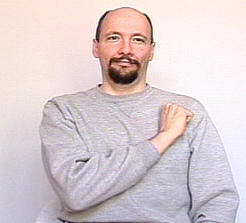
MYSELF: Thump your chest twice with the whole thumb-side of your "A" hand.
This sign can be used to mean "my own," or "myself."
Note: The tip of the thumb is not jabbing into the chest. The backside of the whole thumb makes contact with the chest.A variation of this sign is to point the knuckles at your chest. (I don't do it that way very often because it is rather uncomfortable.)
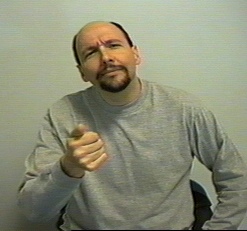
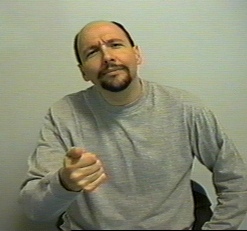
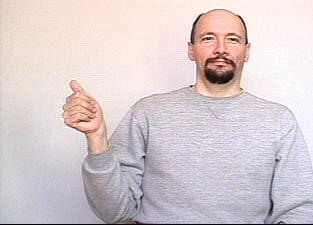
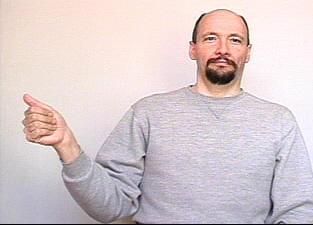
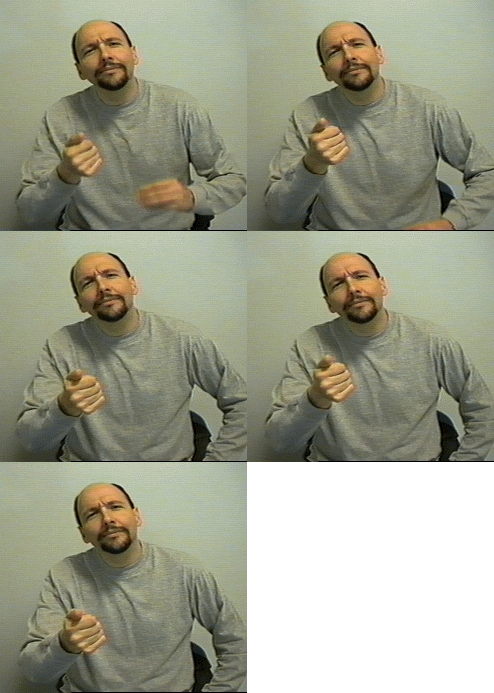
YOURSELF: Use an "A" handshape. Double motion. Use a slight jabbing motion. Thrust the hand toward the person you are saying "yourself" to, pull it back and inch, and thrust it forward an inch. Here's an example of "how about YOURSELF" (See the wh question expression?"
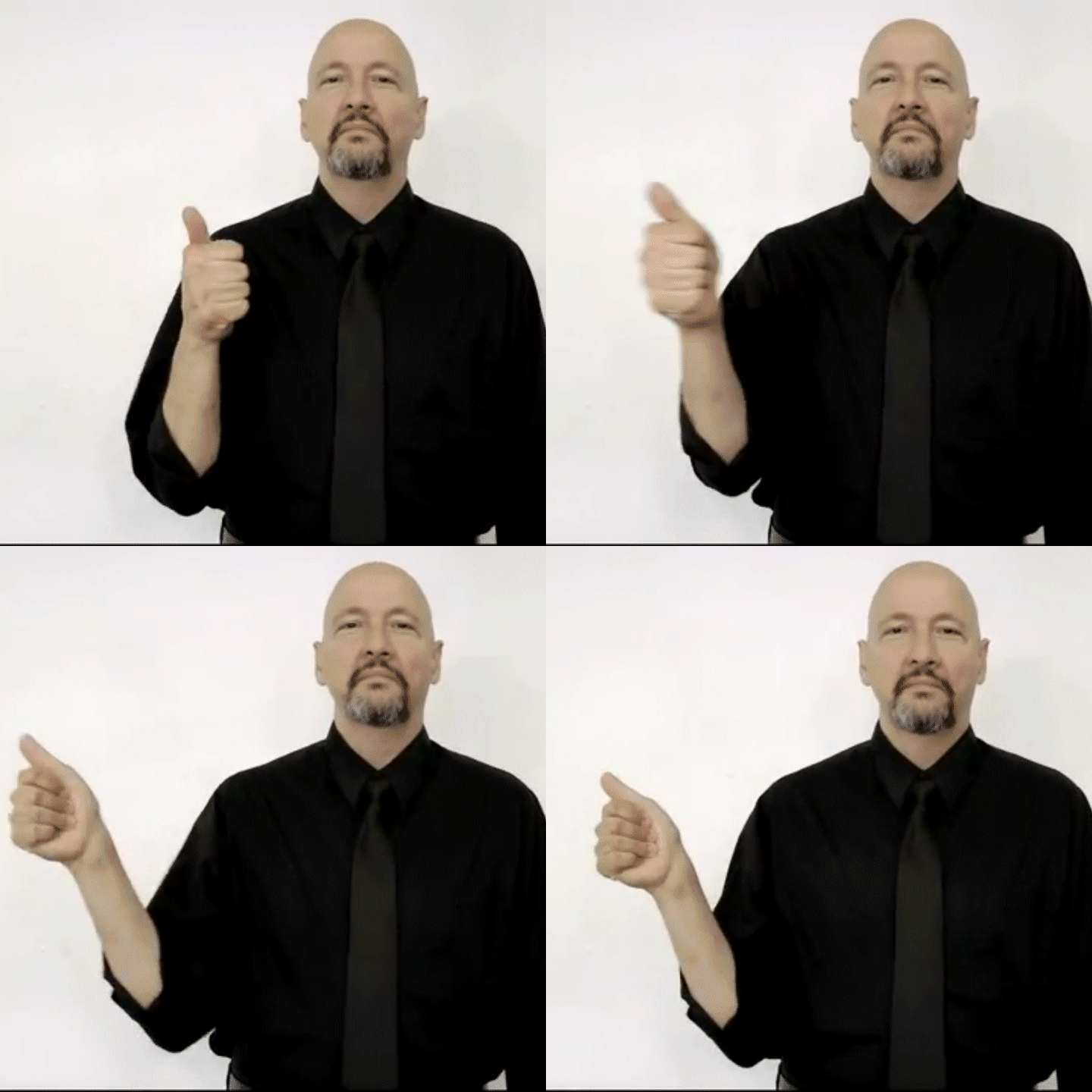
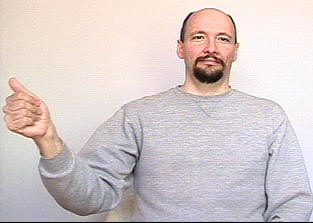
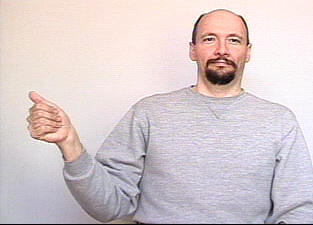
THEMSELVES: Use a smooth sweeping motion off to the right:
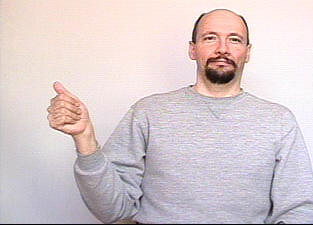
OURSELVES: Use a smooth arching motion to move the right "A" hand from the right side to the left side of the chest.
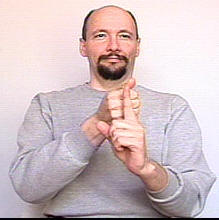
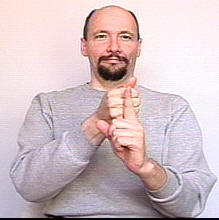
A version of the sign "himself" or the sign "itself" can be done by "hitting" the left index finger with the right "A" hand. I use this version for situations when the thing being referred to is more abstract. If I'm talking about "Bob" I'd probably just point off to the right and use an absent referent. If I'm talking about "a man" in general but not a specific man, I would use this sign:
THINK-SELF:
You can combine the signs THINK and SELF to mean: "It is up to you." "It is your decision."
Just touch the tip of your index finger to your forehead to sign THINK, and then sign "YOURSELF" in the direction of the person you are talking to.Notes:
Scott (a student) asks, "Should the expression 'who-is' be included in the description of signs related to "self"?
Answer: Good question. Yes. The sign "HIMSELF / HERSELF" can be used to indicate the English concept of "who is," "who was," "who has," "that was" etc.
For example, consider the sentence, "The man who has never made a mistake, has never done much."
How should we express the concept of "who has?"
A way to express this would be to use the sign "himself."
I'd sign the sentence: PERSON HIMSELF NOT-YET DO WRONG-(oopps/head-pull-back version)-- WHY? HE INVOLVE NONE.
Or another way: PERSON HIMSELF MISTAKE NEVER, WHY? HE DO NOTHING!
Also see: SELF-STUDY
NOTES:
In a message dated 4/1/2005 9:35:10 AM Pacific Standard Time, smdaniluk@ writes:
Hello Dr. Vicars,
I have a question about the use of pronouns "you" vs.
"yourself" and "he/she" vs. "himself/herself". I find
it very confusing to see sentences like "He himself
Deaf", instead of "He Deaf", or as in your lesson 35,
"Motorcyle you have?", but in another sentence
"yourself", not "you" is used when asking someone if
he wished he had a hearing aid. When should "-self" be
used and what's the difference? Thank you so much.
Suzanne Daniluk
Houston, Texas
Suzanne,In English you might occasionally ask someone if they wanted "their own" hearing aid or "their own" apartment.For exampleCompare these two sentences:I want an apartment.I want my own apartment.
The second sentence has a different meaning. It indicates that the person wants to be independent.How would we express that meaning via ASL? We would do so by using the sign "MYSELF."PRO-1 WANT MYSELF A-P-T = I want my own apartmentNow consider these two sentences:English:
Do you wish you had a hearing aid?Do you wish you had a hearing aid of your own?
Possible interpretation:YOU WISH YOU HAVE HEARING-AID?
YOU WISH YOU YOURSELF HAVE HEARING-AID?The second sentence implies that the person asking the question has a hearing aid or that the two people in the conversation have been interacting with a person who has a hearing aid.Do I use the sentence "HE HIMSELF DEAF?" If so, which lesson?Let me give you an instance where you might see the "...HIMSELF DEAF" concept used appropriately.Suppose you were telling a story and wanted to say: "There was a deaf man who bought a motorcycle."HAPPEN MAN HIMSELF DEAF BOUGHT MOTORCYCLE.Cordially,Dr. V











Notes: