BUT: The
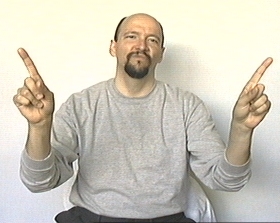
American Sign Language (ASL) sign for "but"
The signs "but" and "different" are basically the same sign. The sign "but" generally uses a "smaller" movement, however, it may be done quite large depending on how excited the signer is. It is also very common to fingerspell B-U-T when you mean "however."
BUT:
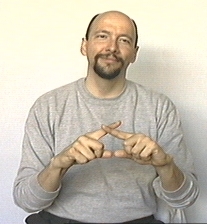
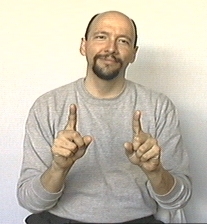
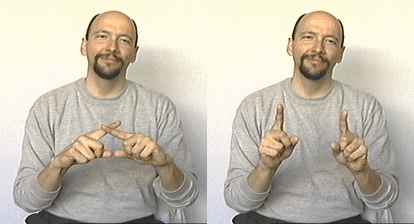
BUT or DIFFERENT:
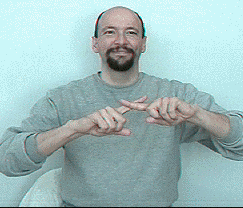
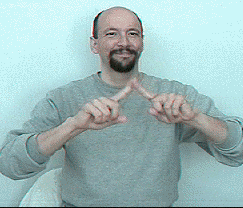
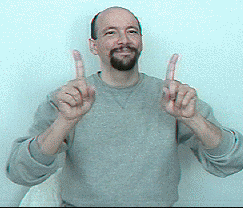
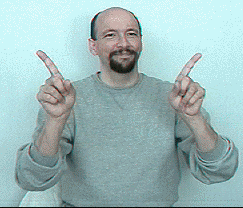

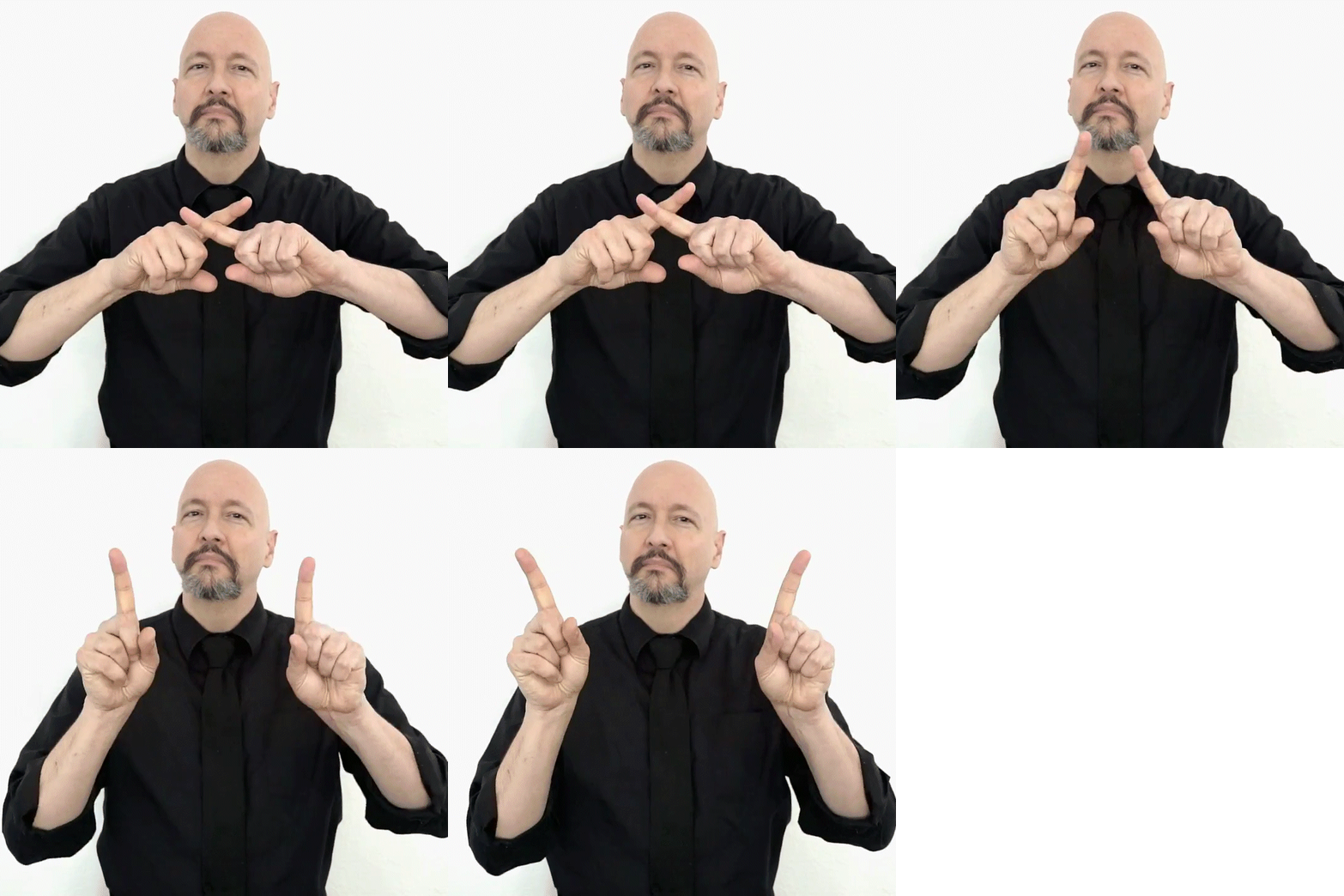
The sign for "but" is (in general) the same as the sign for
"different." However, I suggest that the sign for
"different" uses a larger motion (in general) than the sign for
"but."
Memory aid: "A small but(t) makes
a big difference." (Forgive me. Couldn't resist.)
The sign below could mean either "but" or "different" depending on the rest of
the signs in your sentence:
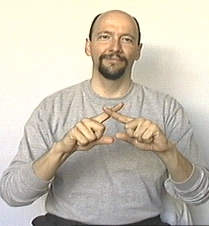
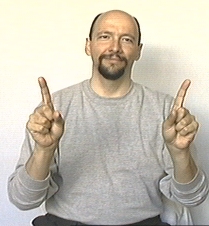
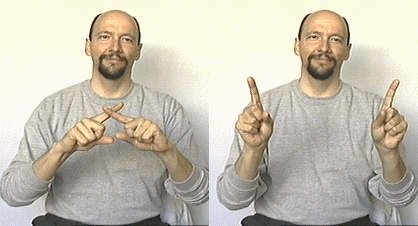
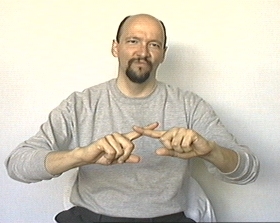
You can do the sign larger to incorporate the concept of "very." When
doing the sign this large it is obvious that what you mean is
"very different" or a "large difference."
very-DIFFERENT:
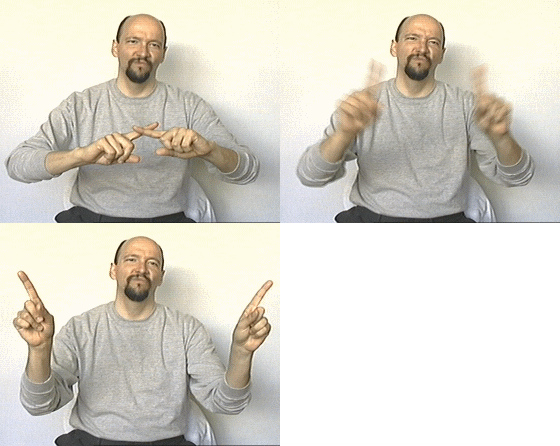
Sample sentence: I FINISH PASS ENGLISH CLASS BUT FLUNKED FRENCH.
Notes:
QUESTION: An ASL Hero asks: "Hey Dr. Bill!!! I know you
usually teach us several versions of a sign. I remember you teaching us a
version of "but" being the same sign as "different," and in a video I
recently watched you fingerspell B-U-T. Is one version of BUT considered an
older version vs the other being more common now?" - [adapted from a
Youtube comment]
REPLY:
The concept of "but" can be expressed either by signing "DIFFERENT" or by
fingerspelling "B-U-T."
The spelled version leans toward being used more as a conjunction that is
"used to introduce a phrase or clause contrasting with what has already been
mentioned. (See: https://en.oxforddictionaries.com/definition/but)" and for rhetorical
usage.
The "DIFFERENT/but" version seems to lean toward being used as a preposition
meaning "except;
apart from; other than,
(https://en.oxforddictionaries.com/definition/but)."
However to claim a clear distinction in meaning or usage between the two
signs would be to ignore real-life usage of the signs BUT and B-U-T in the
Deaf Community.
It is perhaps more useful to look at common signing situations in which the
concept of "but" is used. For example, consider if your conversation partner
were to be stating something and you had a desire to interrupt and add
information you might sign HEY (the fluttering up/down wave) -- and since
HEY uses one hand and is in a generally open, flat shape already -- it is
easy to simply transition into spelling "B-U-T."
If a person is thinking (internal dialog) that they "disagree" with
something, and/or they plan on signing something to the effect of "but I
disagree" -- the person might be inclined to use the index finger version of
the sign BUT due to being influenced by the upcoming sign for DISAGREE which
also uses index-finger handshapes. If a person were to be thinking "but that
is different" -- the person might also be influenced to efficiently sign
"THAT DIFFERENT!" -- (rather than take more time to sign: "B-U-T THAT
DIFFERENT!").
Question:
Why is "but" spelled sometimes but other times uses a two-handed sign?
Would it be wrong to use the sign for "but" instead of spelling it in
some situations?
Response:
Look up "Venn diagram" and note the overlapping nature of the diagram.
Think of the concept of "but" as a Venn diagram wherein the two versions
overlap (a lot) and it isn't a situation of right and wrong.
If you ask signers (even highly skilled signers) for the difference
between "but" (the sign) and "but" (the spelled version) you won't get a
very definitive answer. (I know because I have tried, ha).
I will provide for you a perspective.
Think of the index-finger based gesture for "Now hold on there -- there
is something else to consider!"
Notice how the fingerspelled "but" sign works a lot like that
index-fingered "hold on, there's more to it" gesture?
Then the two-handed "but" sign is based on the sign for "different"
which is a negation of the two-handed-index finger version of the sign
for "same."
So if you mean "but" as in "but that's different" then the two-handed
"different" sign would fit well.
If you mean "but" as in "but hold on now there is more to consider" --
then the fingerspelled version would fit well.
Keep in mind though that most Deaf do not get this granular (specific or
nuanced) regarding their use of the sign "but." So you may see different
people use different signs for "but" in the same exact sentence.
Notes:
Also see: DIFFERENT
Notes: